
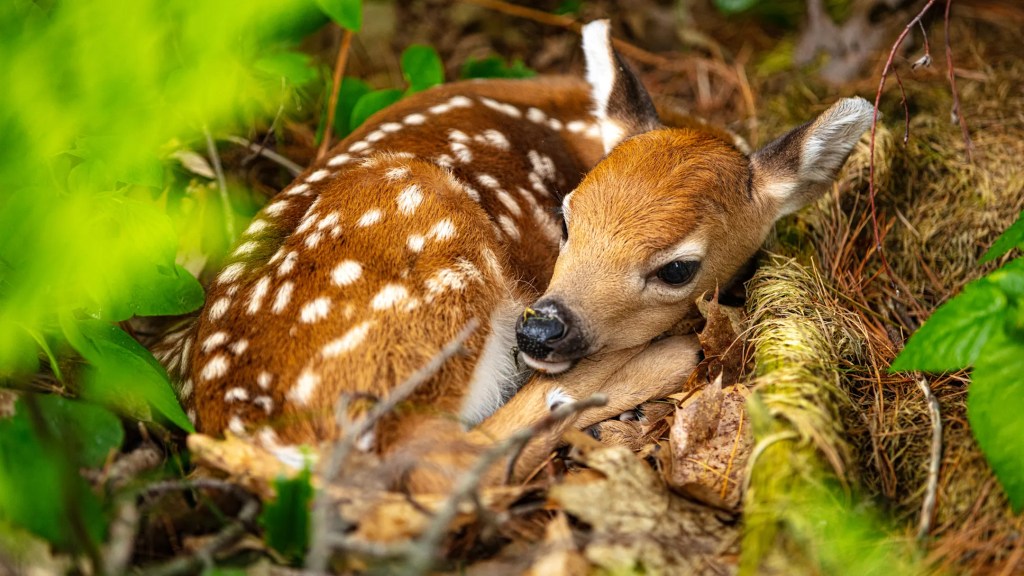
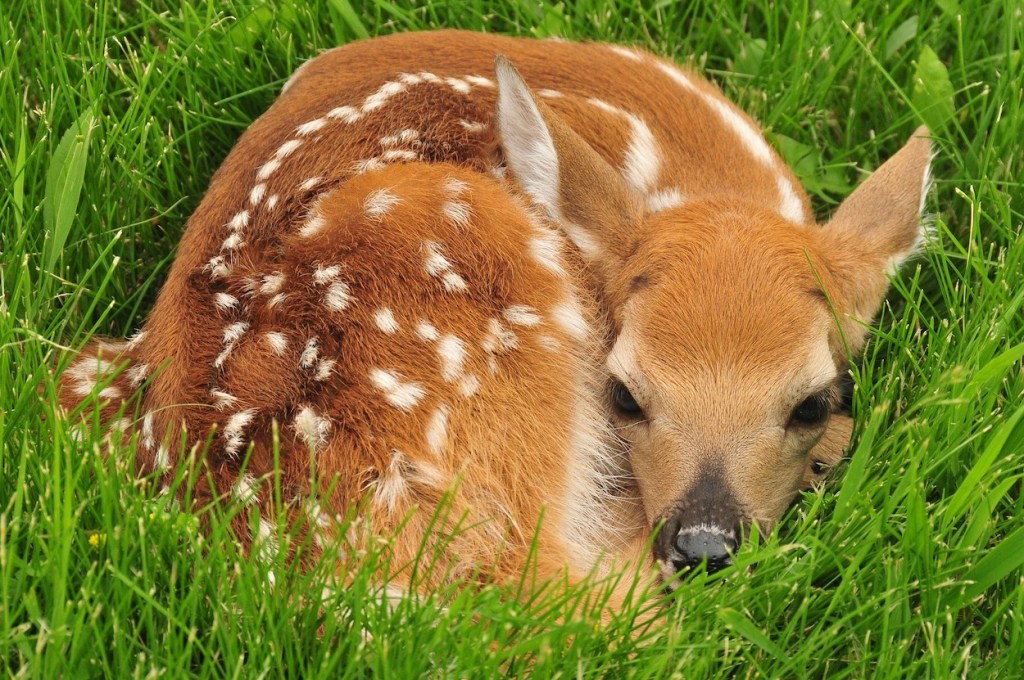
It’s important to remember that deer (like rabbits) do not stay with their young, but hide them and only briefly visit to nurse them. The babies have no smell and are too small to keep up with their mom. So, the mother hides them to protect them from predators. This leads many well-meaning finders to incorrectly assume that the fawn is an orphan. It’s estimated that up to 75% of fawns that come into rehab have been accidentally kidnapped. Our time and resources are limited, so it’s important that we provide care only to those animals that really need it. Also, as hard as we try, we are still poor surrogates for the real mom. So if you see a fawn quietly resting, please leave it alone. The mother is nearby. A fawn that needs to be admitted to a wildlife rehabilitation facility will be in distress: crying, curled ears indicating dehydration, chasing after humans or other animals, visible injuries, open wounds with or without maggots. And please, don’t attempt to raise a fawn on your own. They have delicate digestive systems and need a specific formula and care, both while they’re fawns and at time of pre-release.
Britannica White-tailed Deer Habitat, Diet & Adaptations
Fox Run Environmental Education Center Everything You Want To Know About White-Tailed Deer
National Park Service White-tailed Deer
Wikipedia White-tailed Deer
Newhouse Wildlife’s advice about What to do if you find a baby fawn
Operation Wildlife: So You Found a Deer


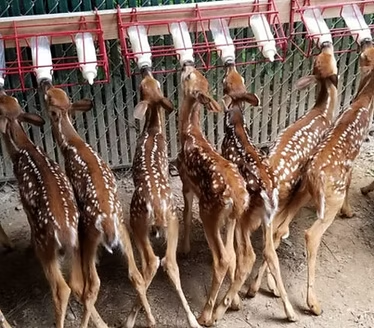
When we rehabilitate deer, as they get older, it’s important to ease off their habituation to humans and “wild them up”. One of the ways we do that, toward the end of bottle feeding, we provide bottles through blinds so they stop associating food with humans.

 Gentle Paws, for the Animal Lover