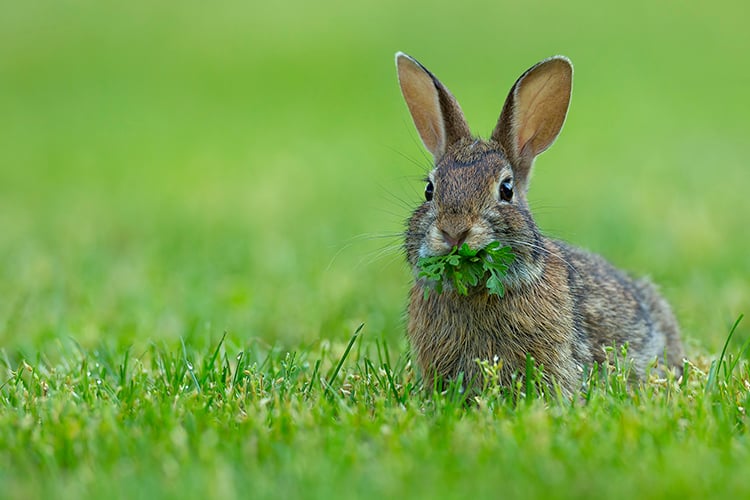
Spring is baby season for most mammals, including cottontails. Cottontail rabbits often build shallow nests covered with only a thin layer of fur, old grass, and leaves, sometimes in the middle of your yard. If you have a yard, please walk it before the first time anyone mows it.
If you find a nest with healthy bunnies (chubby little tummies), their mom is close by. She doesn’t stay with them so that her scent doesn’t attract predators. She’ll only come at dawn and dusk to feed them very rich milk. She won’t come if there are animals or people around. Don’t move the nest. There are techniques to determine if she’s coming back to nurse each day.
If she doesn’t come, something may have happened to her. Reasons to find a rehabilitator as soon as possible: If you find a nest with any babies who are injured or dead, or are thin, unfed (ribs showing), with wrinkled skin, or concave bellies. If they’re bleeding, have any open wounds, or broken bones. If a bunny has been in a cat’s or dog’s mouth. If a bunny is covered in fly eggs (these look like small grains of rice). If it’s cold, wet, or crying nonstop. All are warning signs.
Rabbits are notoriously difficult to raise because of their high stress level (they’re at the bottom of the food chain) and complicated digestive systems. They require a special formula and specific care, especially around weaning. So we don’t want to “kidnap” them if they’re healthy and mom’s around. She will do a much better job of raising them. Nor do we want them raised by a well-intentioned but inexperienced person. These babies need an experienced rabbit rehabber! Also be aware that a bunny who is about the size of a softball has already been weaned and is foraging on their own.
This is a great article with more information by The Wildlife Center of Virginia: If You Find A Baby Rabbit
Be Aware: Capture Myopathy
Capture myopathy (CM) is a non-infectious disease of wild and domestic animals in which muscle damage results from extreme exertion, struggle, or stress. CM often occurs as a result of chemical immobilization, capture, or transport, but it is not always associated with capture and can be the result of other causes of stress.
When working with cottontails, fawn, and birds, who are prone to CM, we must limit stress by decreasing stimulation from the environment. No music, minimize talking, small and intentional movements, and other mindful approaches can help decrease stress for wildlife.
If you find a cottontail in need of rehabilitative care, we encourage you to carefully place them in a lined and ventilated box and place the box in a quiet and dark place until you can secure rehabilitative placement. Do not handle, do not pass around for everyone to pet, and do not blast music when transporting. These small but mindful actions can save little cottontail lives.

Mass Audubon Eastern Cottontails
NHPTV Natureworks eastern cottontail
USDA Natural Resources Conservation Service Eastern Cottontail 8 pg. PDF
SUNY ESF Eastern Cottontail
Wikipedia Eastern Cottontail
YouTube Video: Eastern Cottontail 101
Rehabilitation
Despite offering resources here, it is my strong recommendation that you find an experienced wildlife rehabilitator! Eastern cottontails are notoriously difficult to rehabilitate because of their high stress/capture myopathy (a muscle reaction that can be fatal). and delicate digestive systems. Success rates for raising cottontails in rehabilitation centers are generally low, often below 20%, making rehabilitation a challenging endeavor. I have experienced a much higher success rate, but this is after 40 years of experience. Please consider finding a rehabilitator.
Animal Advocates Wild Bunny Rehabilitation
The Wildlife Center of Virginia Help and Advice
Captive Rearing of Eastern Cottontail Rabbits 38 page downloadable manual
Wild Food for Wildlife Cottontail Foods
An Assessment of Infant Eastern Cottontail Rehabilitation Success White Paper
 Gentle Paws, for the Animal Lover